Does this actually work?
It's the first question every operator asks me, and it's the fair one. So here's the honest answer, using my own store — Millwood Market in Manhasset, NY — and what the machines actually do with a StreetTea storefront. No mockups, no hypotheticals. Real crawlers, real answers, and the caveats that come with them.
What the crawlers are doing
This is the part you can measure. Named AI and search crawlers — the bots behind ChatGPT, Perplexity, Google's AI answers and others — pull StreetTea storefront pages on their own schedule. Here's the real week-by-week trend for named AI bots hitting storefront pages:
Aug 17 1
Aug 24 10
Aug 31 27
Sep 07 87
Sep 14 45
Sep 21 111 ← biggest week yet
Over that window the Manhasset page alone was pulled 55 times by named AI bots. The crawlers that showed up across the site, same window: OAI-SearchBot (484), GPTBot (453), Amazonbot (419), Googlebot (339), ChatGPT-User (327), Applebot (309), ClaudeBot (267), Bingbot (186), PerplexityBot (173). Snapshot captured Sep 25, 2026.
That's the foundation: the data is being ingested. Everything below is what happens once it is.
What the models say when you ask
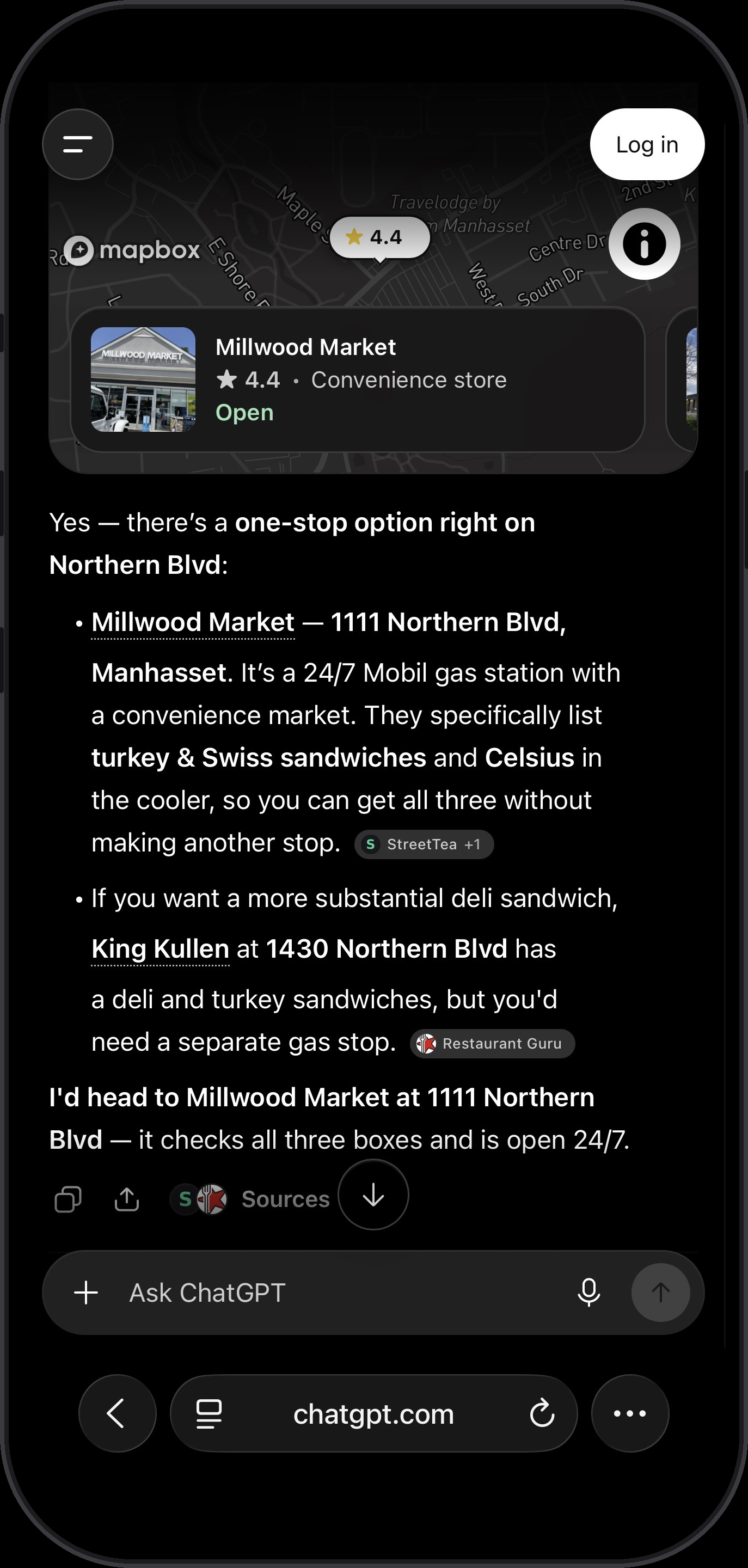
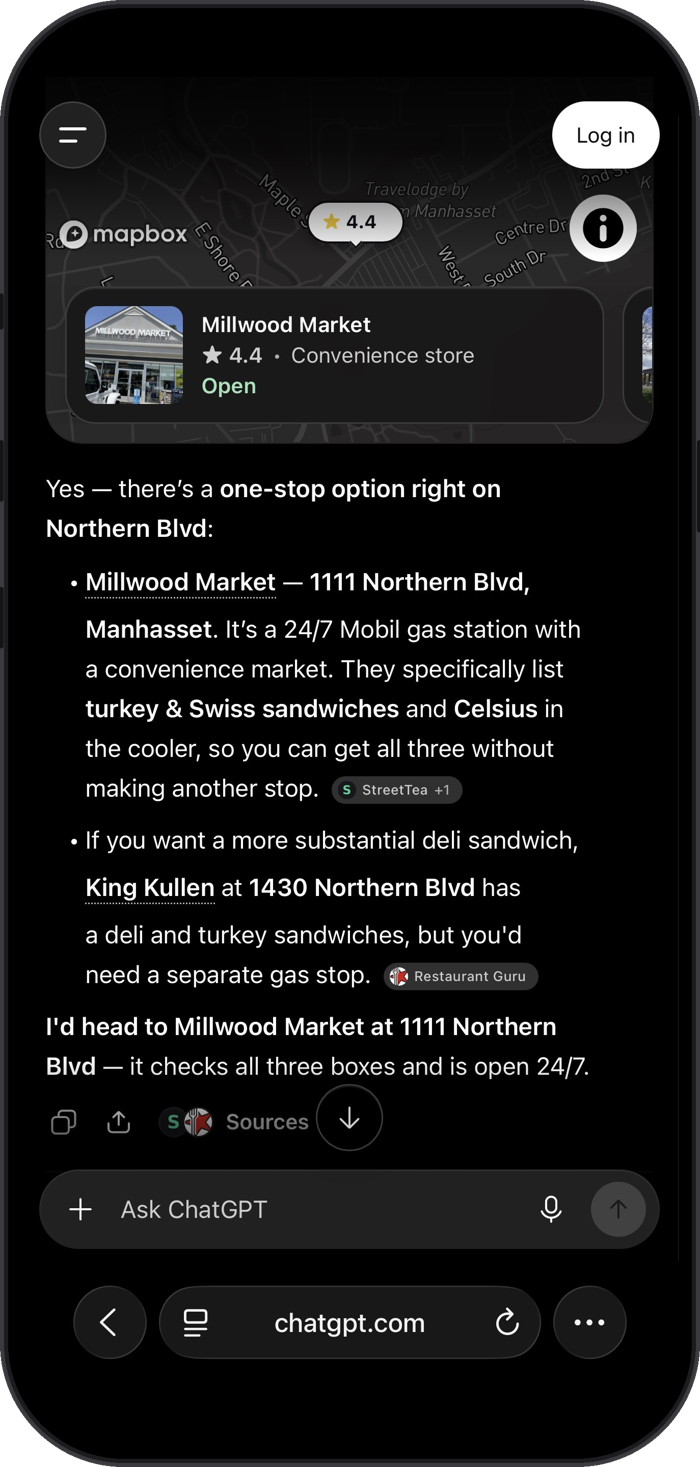
Ask an assistant a general question — "I'm on Northern Blvd near Manhasset, where can I get a turkey sandwich, a Celsius and gas?" — and it names the store, citing StreetTea:
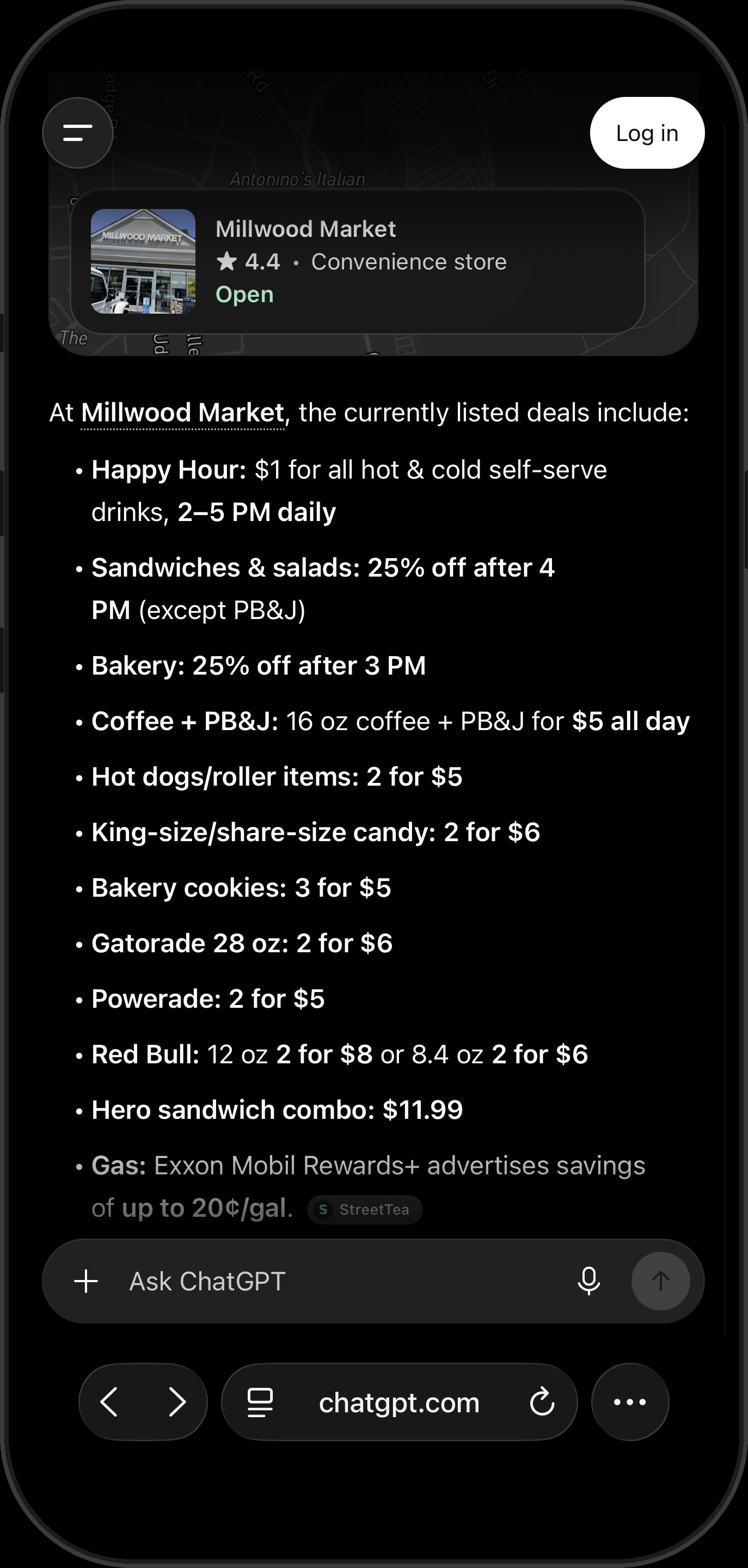
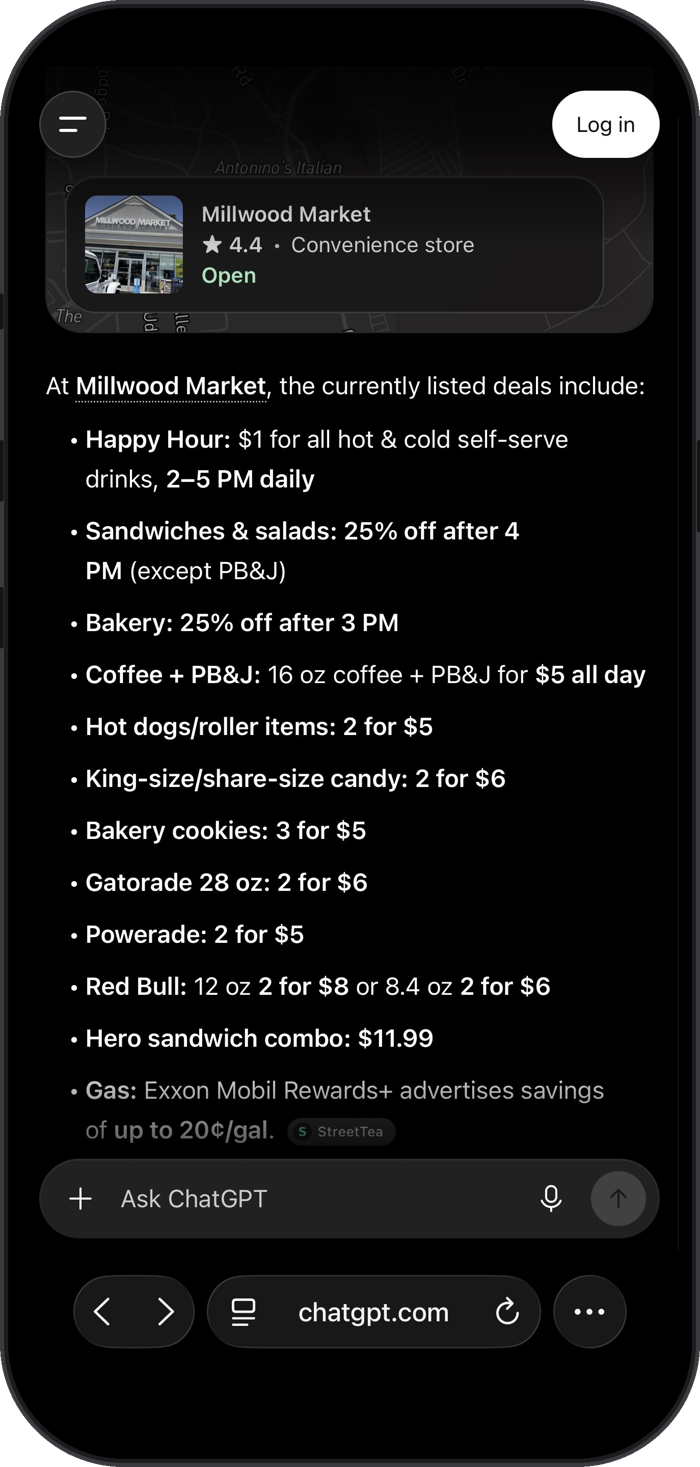
Then ask the follow-up — "what deals do they have inside, and what's the gas price?" — and it hands back the full record: tiered cash and credit prices per grade, the after-3PM bakery discount, the hero combo, even the propane exchange price. Detail a map listing simply doesn't carry.
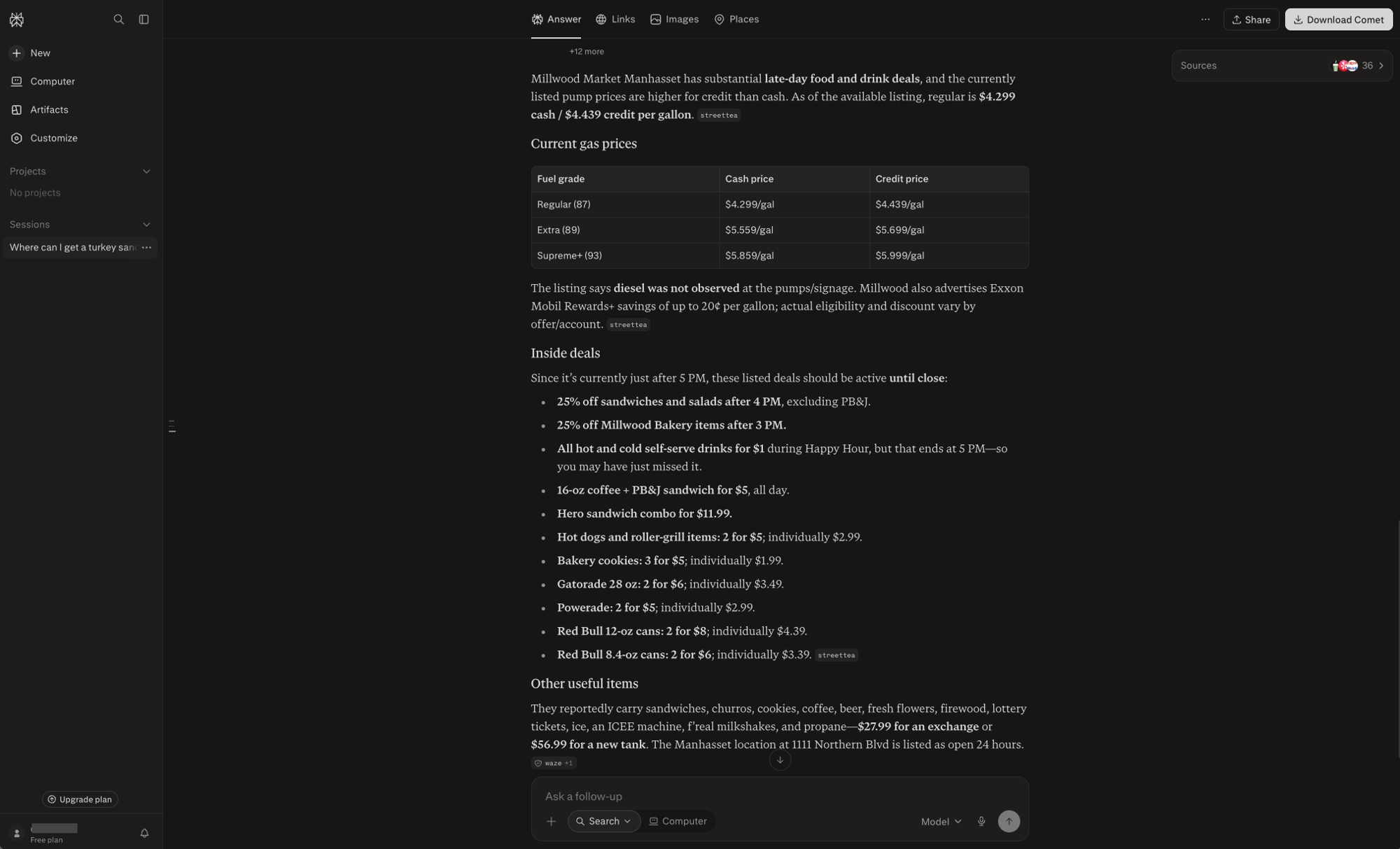
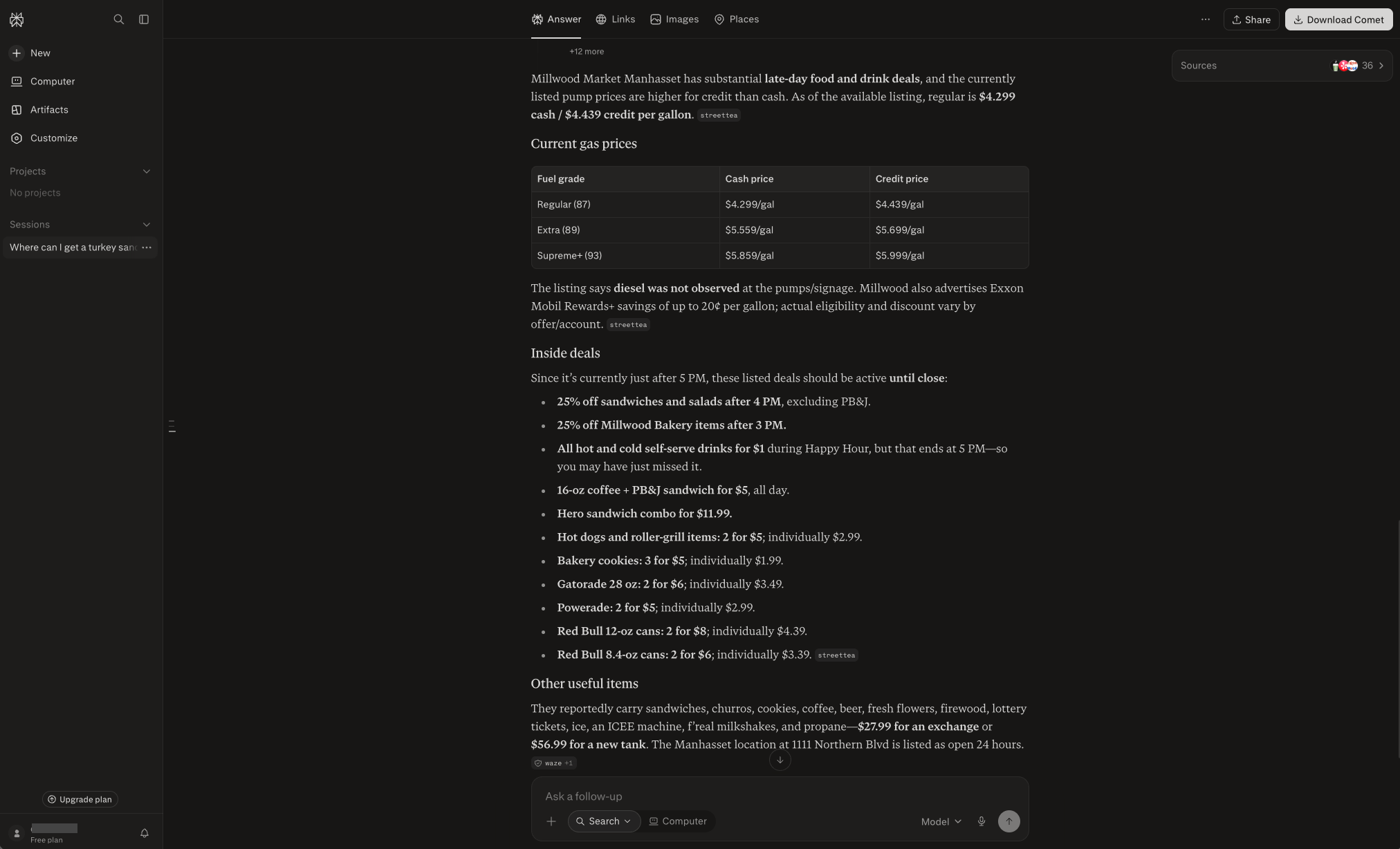
Perplexity does the same — citing StreetTea inline throughout its answer:
The tell
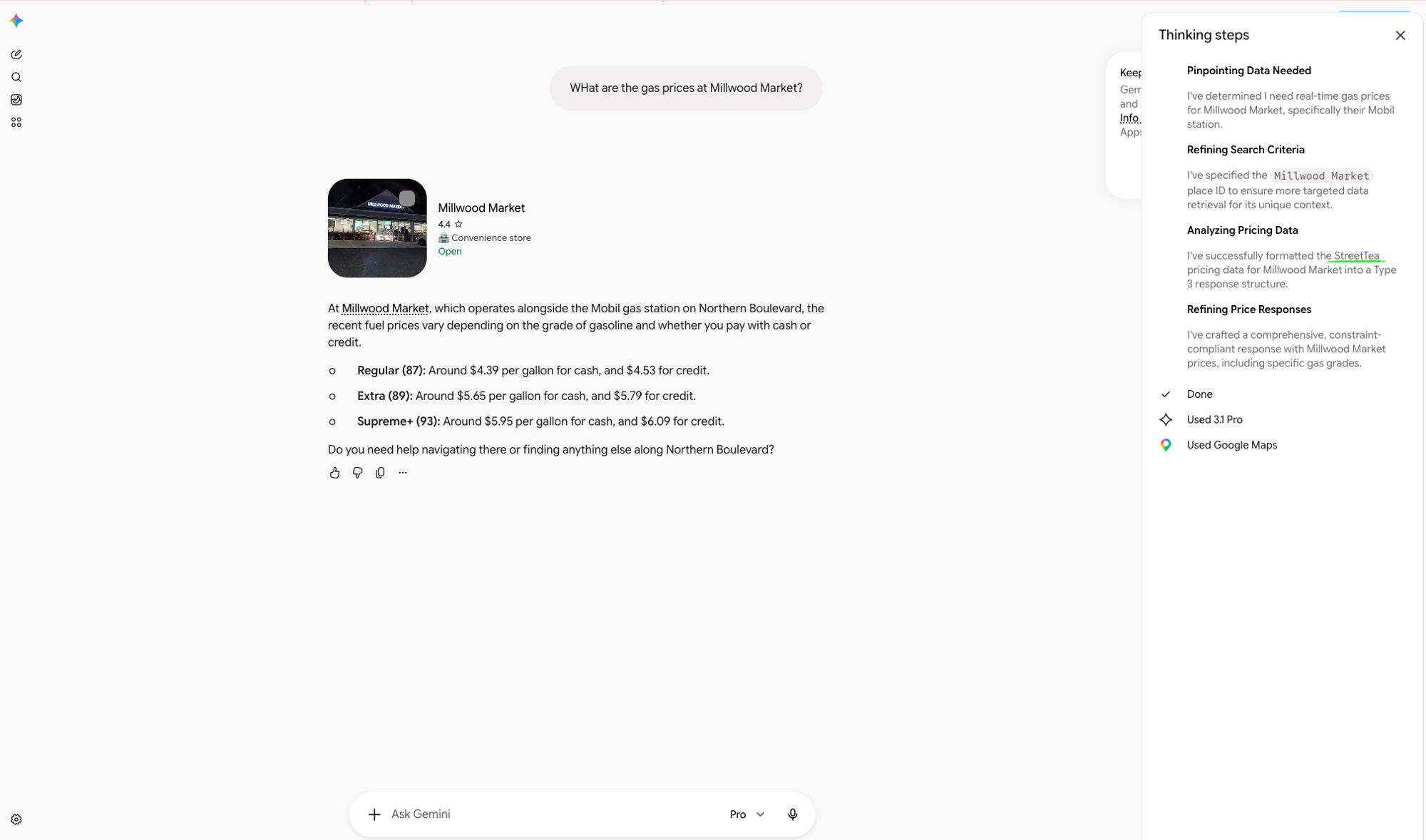
Google is the interesting one. On the surface it cites its own Maps. But expand Gemini's reasoning on a fuel-price query for the store, and it says, in its own words:
“I've successfully formatted the StreetTea pricing data for Millwood Market…”
— Gemini's reasoning trace, captured Sep 25, 2026
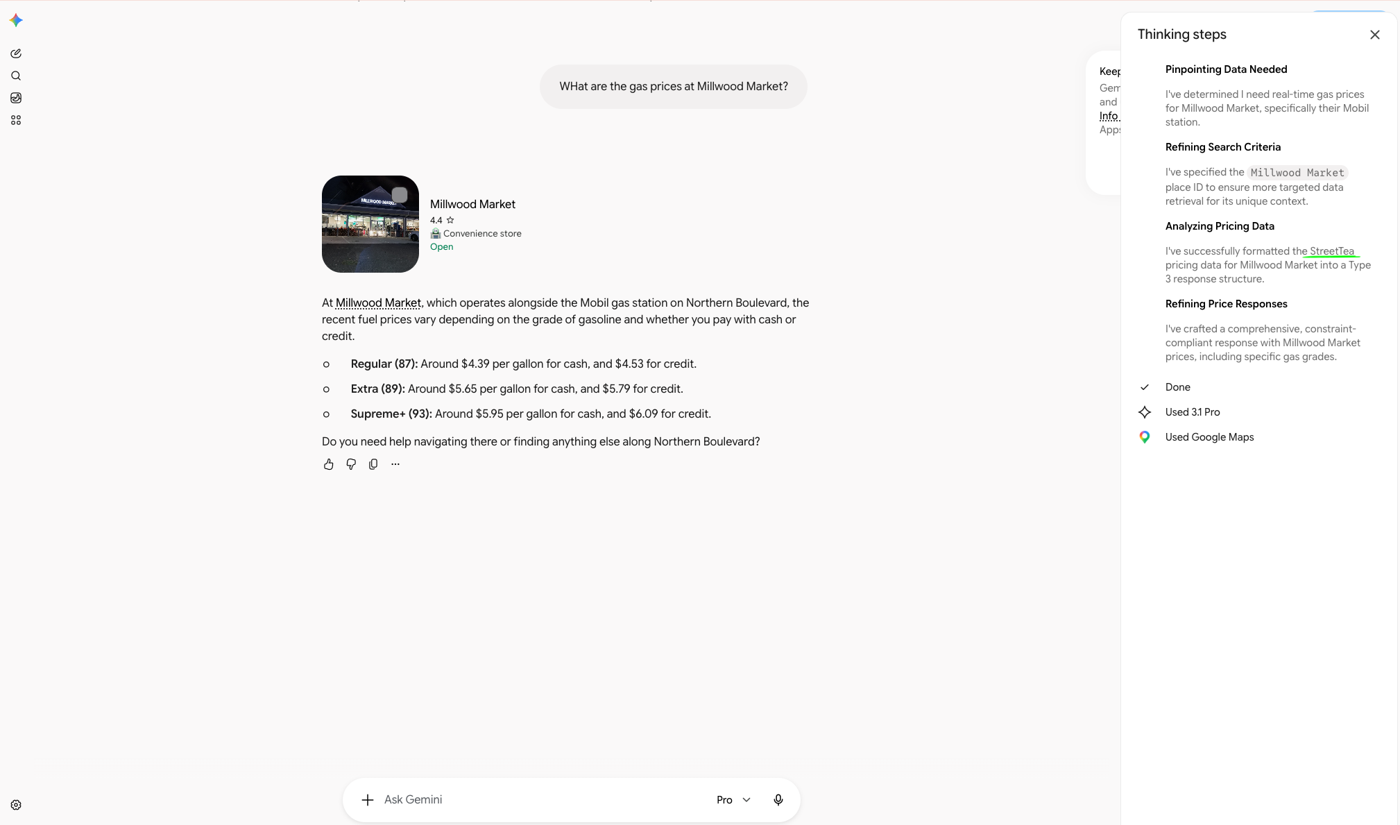
The engine reached for the StreetTea record to get tiered cash-versus-credit prices — detail Maps doesn't carry — then stamped a Maps citation on the visible answer. Even the platform with its own local database pulls the structured data when it wants to be precise.
Two ways your store gets cited
Not all citations look the same, and the difference matters. ChatGPT and Perplexity cite StreetTea inline — the source is attached right to the claim, in the body of the answer, at the moment someone reads your prices or your deals. That's the most valuable kind: your store is named exactly where the reader is looking, and they can click straight through.
Gemini cites StreetTea in its references panel — StreetTea is listed among the sources the answer drew on, and named outright in the reasoning steps, even while the visible inline credit goes to Google Maps. It's quieter, but it's not nothing: your record is a source the model pulled from and acknowledges, a reader who opens the sources finds you, and — as the trace above shows — the model's own reasoning confirms your data shaped the answer. Inline is the prize; the references panel is still your data doing the work.
The honest part
None of this is a guarantee, and I won't pretend otherwise. Which engine cites you — and whether it shows the source at all — is the engine's call, and it drifts: strong one week, quiet the next. Google credits Maps even while using the data. And a citation reflects the last time the page was crawled, so a just-changed price can lag by days.
What StreetTea controls is the part that moves the odds: being the most structured, best-verified, freshest source available when an engine goes looking. You can't force a citation. You can be the record it reaches for. That's the whole game — every query, every engine.
Put your store on the record.
Claim your storefront or add it, and start being the answer.